

Calculate cost of poor quality by adding the internal and external failure costs inside a stated period and accounting boundary. Include scrap, additional rework and customer failures, but reconcile overlapping records before adding them. Inspection and prevention belong in the wider cost-of-quality view. This guide builds a fictional monthly ledger, separates incurred costs from possible lost contribution and shows how to make the result useful to both quality and finance.
Build a failure-cost ledger that finance can reconcile.
Keep rework, scrap and returns from overlapping.
Separate an expense reduction from capacity released.
Choose a definition before collecting invoices
ASQ separates prevention, appraisal, internal failure and external failure in its cost-of-quality framework. Its dedicated guidance defines cost of poor quality, or COPQ, through the two failure categories. Use that convention consistently; other organizations may draw the boundary differently.
Record one period, currency, site and cost basis. A rejected part can create entries in a production log, a quality report and a finance account. Those are three records of an event, not automatically three separate costs. Give each underlying event an ID and reconcile its valuation.
Build the monthly failure-cost ledger
The following illustrative example uses fictional euro costs for one month. Scrap valuation already includes the material and conversion cost incurred before rejection. Rework contains only additional labor and consumables, not the original part cost again.
Customer credits use the recorded net settlement in this simplified ledger. Real return, inventory, tax and warranty accounting requires finance review. The point is to choose one treatment, document it and prevent another team from counting the same settlement again.
EUR 6,480 / EUR 240,000 monthly sales = 2.70%. Sales is the disclosed reporting denominator, not a production-quality rate.
| Failure cost | Calculation | Monthly amount |
|---|---|---|
| Scrap, net of recovery | 120 parts × EUR 18 | EUR 2,160 |
| Additional rework labor | 80 hours × EUR 30 | EUR 2,400 |
| Rework consumables | Recorded additional usage | EUR 360 |
| Customer settlements | Net recorded amount | EUR 900 |
| Return transport | Separate carrier charges | EUR 240 |
| Failure investigation | 12 hours × EUR 35 | EUR 420 |
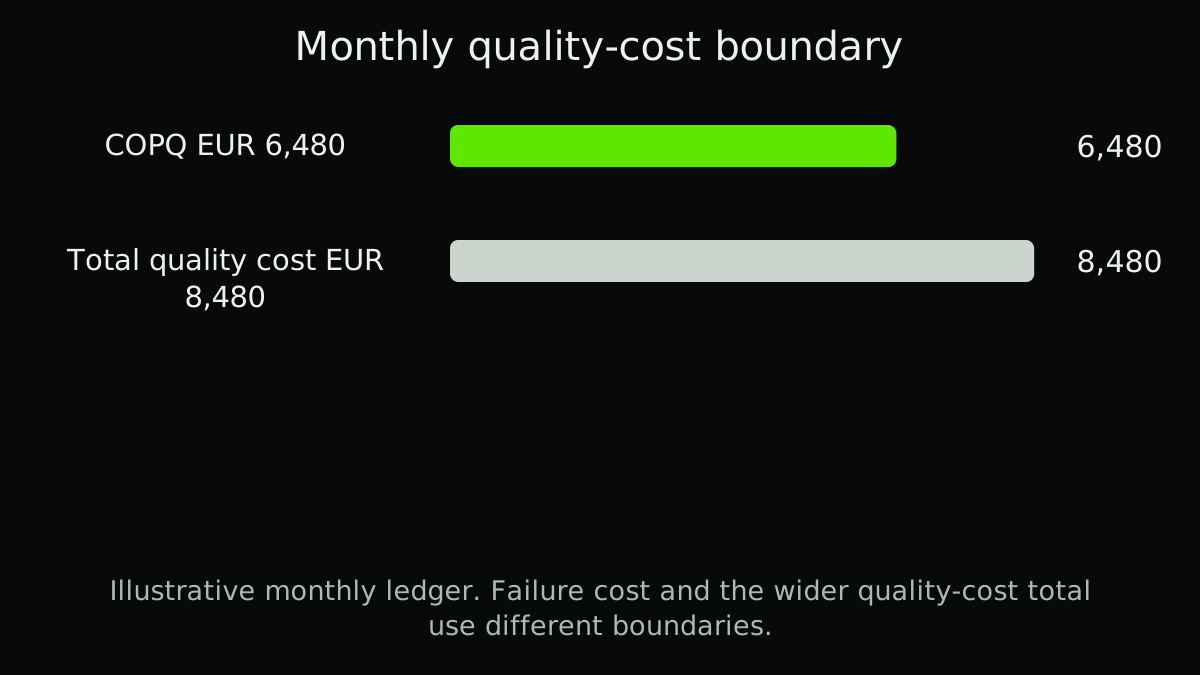
| COPQ total | Six non-overlapping entries | EUR 6,480 |
Keep inspection and opportunity cost visible but separate
Suppose the same month also has EUR 1,200 of routine appraisal and EUR 800 of prevention. These add EUR 2,000 to the wider quality-cost view, giving EUR 8,480 under our stated categories. Calling all EUR 8,480 COPQ would change the definition halfway through the calculation.
A blocked bottleneck may also lose saleable output. Estimate any lost contribution separately using unmet demand and genuinely avoidable variable costs. Do not add full lost revenue to a ledger already containing product costs. Released hours can be valuable without reducing payroll this month. See downtime cost for that distinction.
Reconcile the ledger before ranking defects
Match event IDs, quantities and dates across production, quality and finance. Check whether a standard scrap allowance, inventory write-off or supplier recovery has already affected the amount. Retain recovery and reversal entries instead of quietly rewriting the original event.
Then group the reconciled costs by failure mode, product or process. Compare cost with first-pass yield and customer consequence. A cheap frequent defect and a rare expensive escape can require different responses.
- Set the boundary
Agree the month, site, currency, valuation and categories with finance.
- Join event records
Connect physical failures to distinct expenses and recoveries using stable IDs.
- Resolve overlaps
Check settlement, scrap, labor and allowance entries before adding them.
- Choose an investigation
Rank reconciled failure costs while retaining safety and customer priorities.
Use the result without rewarding hidden defects
Track both total cost and a disclosed denominator such as sales or production value. Keep the denominator stable when comparing periods. A larger sales month can lower the percentage while failure costs rise in euros.
Avoid a target that makes people stop logging rework or defer necessary inspection. Keep defect evidence, customer complaints and detection coverage beside the financial result. The rolled-throughput-yield guide helps reveal repeat attempts hidden behind final acceptance.
Take one improvement back to the ledger
Before changing a process, name the failure entry you expect to reduce and the measurement that will confirm it. After the trial, compare similar product mix and reporting boundaries. Distinguish a proposed saving, a verified process change and a finance-confirmed expense reduction.
The download includes this month's fictional ledger and a blank record for your own costs. Start with one recurring failure that quality and finance can both trace.
A related example from Abolfazl
Separate released capacity from an expense that actually disappeared.
In English, on founder Abolfazl’s personal blog. This is related reading, not an independent technical source.
Practical checklist
- Agree the COPQ convention.
- State month, site, currency and valuation.
- Identify the underlying failure event.
- Count original scrap cost only once.
- Use additional costs for rework.
- Reconcile settlements, recoveries and reversals.
- Keep lost contribution separate from incurred cost.
- Confirm whether released capacity changes actual spending.
FAQ
FAQ
Sources and further reading
Authoritative references used to research and verify this guide.