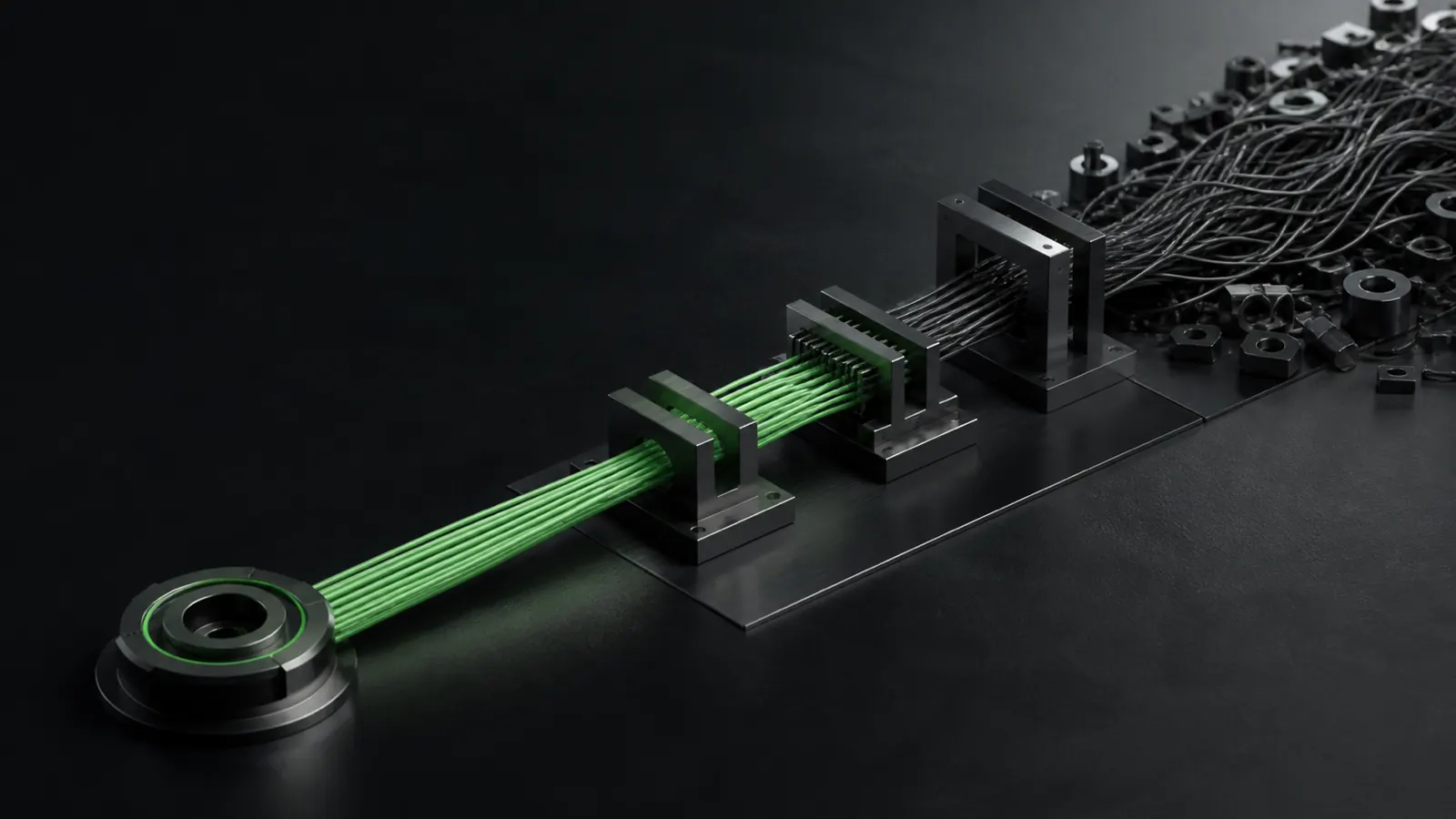
Lean manufacturing is a way of designing and improving work so value reaches the customer with less waste, delay, burden, and instability. It begins with customer value, follows the complete value stream, improves flow and pull, makes abnormalities visible, and develops people through repeated problem solving. Lean is not a cost-cutting toolkit or a campaign to keep every machine and person busy.
Customer value and end-to-end flow made explicit
Problems exposed earlier through stable, visible operating conditions
People developed to improve the work through scientific learning
Begin with value and the complete value stream
Lean Enterprise Institute defines lean as creating needed value with fewer resources and less waste through continuous experimentation. Define the customer, the need, the required quality, quantity, timing, and delivery condition. Then follow both material and information from demand to fulfillment.
Local productivity can damage the value stream. Running a non-constraint machine to maximize utilization may create inventory, longer lead time, extra handling, and hidden defects. Judge changes by customer delivery and total-system behavior, not by whether one resource looks efficient.
- Specify value from the customer perspective
- Map material and information flow together
- Distinguish value-creating, necessary non-value-creating, and avoidable work
- Measure lead time, quality, delivery, and flow across the boundary
Create stability before chasing speed
Flow depends on basic stability: safe work, capable equipment, known cycle times, available material, controlled quality, clear standards, and rapid response to abnormalities. Without these conditions, takt boards and pull signals merely display chaos.
Standardized work is the best known current method, not a script imposed without operator knowledge. It combines work sequence, expected timing, and standard in-process inventory. The people doing the work must be able to surface gaps and improve the standard.
Use flow where possible and pull where flow breaks
Move work continuously when process capability, layout, safety, and demand permit. Where continuous flow is not practical, use explicit pull rules to replenish what downstream consumption has used. Set WIP limits and make exceptions visible.
Takt time is a demand pace, not a speed target for every cycle. Balance work around the required pace while allowing maintenance, variation, changeover, and recovery. Use heijunka or another leveling approach only when product mix and operational conditions support it.
- Define value
Name the customer, need, quality, quantity, and timing.
- Map the stream
Observe the current material and information flow.
- Stabilize
Control safety, quality, equipment, material, and standard work.
- Improve flow and pull
Reduce queues and release work from actual consumption.
- Learn repeatedly
Use PDCA to test gaps between current and target conditions.
Treat waste as a symptom of system design
The eight wastes help teams see defects, overproduction, waiting, non-utilized talent, transportation, inventory, motion, and extra processing. Do not remove an activity merely because it appears non-value-adding; first understand why it exists and which risk or instability it currently controls.
Also inspect unevenness and overburden. Removing inventory without improving reliability can starve the constraint. Reducing staffing without redesigning work can increase ergonomic risk and defects. Lean improvement removes causes and redesigns the system rather than transferring loss to another metric or person.
Build a management system that develops problem solvers
Daily management should connect purpose, a small set of system measures, visible standards, abnormalities, and rapid escalation. Leaders go to the work, ask what was expected and learned, remove barriers, and coach scientific thinking instead of demanding a preferred answer.
Start with one meaningful value stream and a problem the team owns. Establish the baseline, test changes, and show how results affect the customer. Scale only after the operating and management routines work across shifts, not after a one-time workshop produces an attractive map.
A related example from Abolfazl
Follow one order to distinguish motion, transport and repeated work.
In English, on founder Abolfazl’s personal blog. This is related reading, not an independent technical source.
Practical checklist
- Define customer value and the product-family boundary.
- Map material and information flow from demand to delivery.
- Establish safety, quality, equipment, material, and standard-work stability.
- Use takt as demand information, not a universal speed target.
- Create flow where capable and pull with explicit WIP limits elsewhere.
- Investigate waste, unevenness, and overburden together.
- Measure end-to-end customer and system outcomes.
- Coach PDCA and update standards from verified learning.
FAQ
FAQ
Sources and further reading
Authoritative references used to research and verify this guide.