

Use an 8D report to coordinate a significant problem from immediate containment through verified causes, corrective action and prevention of recurrence. Keep the cause that created the defect separate from the reason it escaped detection. Each discipline needs evidence and an owner, not just a completed box. This fictional leaking-cap example shows what to record, which decisions remain open and why a clean short trial alone cannot justify closing a customer complaint.
Separate containment from the permanent correction.
Verify both the occurrence cause and the escape point.
Define closure evidence before declaring the problem solved.
Write the complaint so another shift can recognize it
ASQ describes the eight disciplines as a coordinated problem-solving method. Some systems add a planning stage called D0. D1 establishes the team and D2 states the problem. Use the applicable customer format, but let the evidence drive the report.
In our illustrative case, 12 of 400 returned containers leak at the cap. These are returned containers, not a random production sample, so 3% is a rate within returns rather than a factory defect rate. Record product revision, lot, failure test, dates and observed condition. Avoid turning the symptom into an assumed cause.
D3 containment protects a defined population
Assume shipment records identify 2000 containers within the suspect production window:1400 at the site and 600 already shipped. Containment requires a controlled hold and an agreed customer response for those locations. A shipment quantity is not a quantity already inspected or proven defective.
Specify who authorizes any screening method and how it detects the complaint condition. Record quantities held, screened, released, rejected and still unresolved without overlap. Lot traceability helps scope the population; it does not establish that every descendant is defective.
| Population in the fictional record | Quantity | Initial status |
|---|---|---|
| Site stock | 1400 | Hold pending approved disposition |
| Customer shipments | 600 | Contact and containment decision required |
| Total suspect scope | 2000 | Not an inspected defect count |
| Returned units with observed leak | 12 of 400 returns | Complaint evidence; sampling bias applies |
D4 needs two cause paths
The occurrence hypothesis is that the cap tool slips after wear. The escape hypothesis is that the release check measures applied tool torque but does not detect leakage at the seal. Both remain hypotheses until observations and controlled tests support the causal links.
A root-cause analysis can organize competing explanations. Compare good and failed conditions, tool state, component dimensions and test sensitivity. ASQ’s 8D guidance explicitly separates the occurrence cause from why the problem went undetected. A confident meeting summary supplies neither proof nor a validated test.
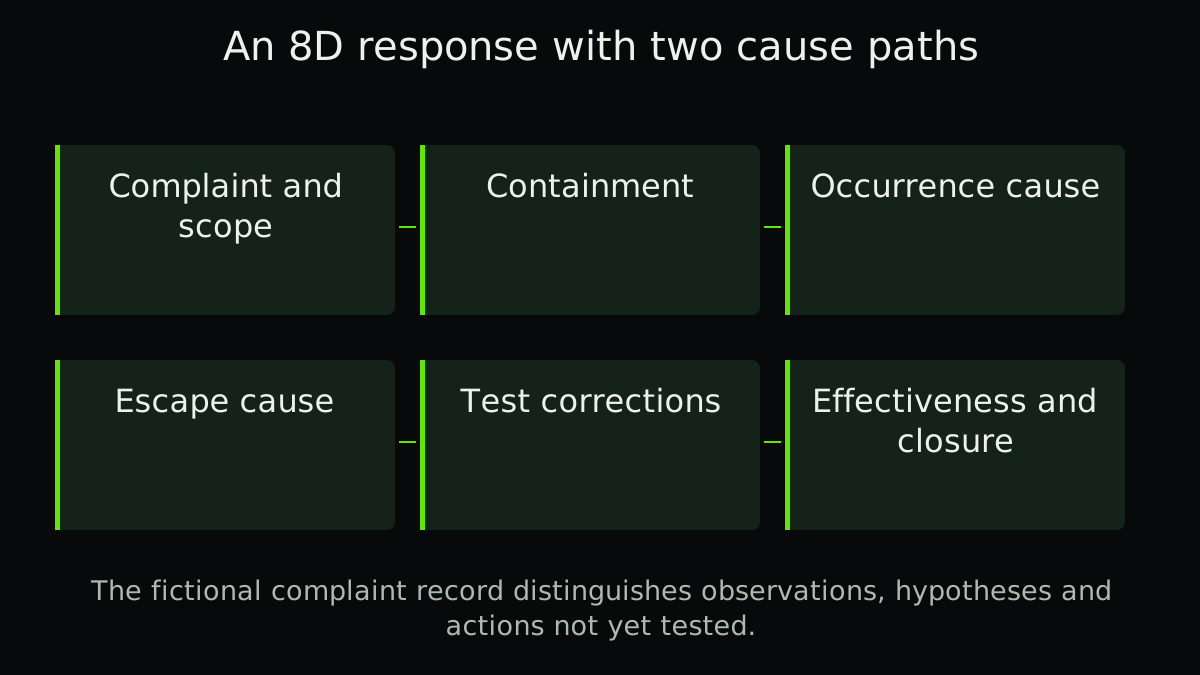
D5 and D6 separate a proposed fix from an effective one
A candidate occurrence correction might replace the tool and introduce a verified wear limit. A candidate escape correction might change the release test. These are proposed actions in the teaching record, not completed trials or equipment instructions.
Before testing, state the expected effect, comparison conditions, inspection capability, sample rationale and stop criteria. If a hypothetical trial finds zero failures in 100 units, report that observation without calling the process defect-free. The acceptance-sampling guide explains why zero found remains compatible with defects outside the sample.
- Define and contain
Agree the symptom, affected scope, hold locations and customer protection.
- Verify cause paths
Collect evidence for defect creation and for failed detection separately.
- Choose and test corrections
Specify predicted effects, safe trial conditions, checks and acceptance authority.
- Verify sustained effectiveness
Review representative production and customer evidence before removing containment.
D7 prevention changes the working system
Update the relevant process flow, risk review, control plan, maintenance instruction and training when the verified correction requires it. Give each change an owner, revision and effective point. Copying a lesson into a database without changing the exposed process leaves the same route to recurrence.
Use FMEA to review related failure opportunities, but do not automatically transfer ratings or controls from this fictional cap problem to another product. Check whether the mechanism and consequences really match.
Close with evidence and a remaining-risk decision
D8 recognizes the team and closes the coordinated response according to the applicable requirements. Closure should point to implemented actions, sustained-effectiveness evidence, disposition of containment and customer agreement where needed. Record any unresolved uncertainty with its actual owner.
The download keeps complaint facts, occurrence and escape causes, proposed actions, test plans and closure evidence in separate fields. A completed record still needs review by the people responsible for containment and release.
A related example from Abolfazl
Check each link in a packaging-jam explanation before choosing the action.
In English, on founder Abolfazl’s personal blog. This is related reading, not an independent technical source.
Practical checklist
- Define the observable failure and test.
- Choose a cross-functional owner team.
- Scope stock and shipments without duplicate counts.
- Verify containment effectiveness.
- Test occurrence and escape hypotheses separately.
- Approve trial criteria before running corrections.
- Update affected instructions and controls.
- Close only with sustained evidence and authorized disposition.
FAQ
FAQ
Sources and further reading
Authoritative references used to research and verify this guide.