
Manufacturing lot traceability connects inputs to outputs through recorded production events. Lot genealogy follows those relationships across splits, mixing and rework to identify potentially affected stock and shipments. A reliable query needs more than a barcode: it needs quantities, units, event identity, time and preserved parent links. This fictional example scopes the terminal descendants of a suspect input without counting intermediate lots again or claiming every descendant is defective.
Follow a suspect lot beyond its first production order.
Count current stock and shipments without adding intermediate lots twice.
Expose missing evidence before making a release decision.
Start with the containment question
Ask which current lots and shipments may contain material from input S. That is a forward genealogy question. Asking which inputs went into finished lot F is a backward question. Neither proves a cause of failure or replaces a qualified disposition decision.
NIST published its final manufacturing traceability meta-framework on 9 September 2026. It gives a way to reason about traceability across systems, not a claim that a database can establish physical truth. GS1 EPCIS defines event structures for sharing visibility data, including input-output transformations. Our simplified record below is original teaching material, not an EPCIS-conformant implementation or legal compliance advice.
Keep the split, merge and rework relationships
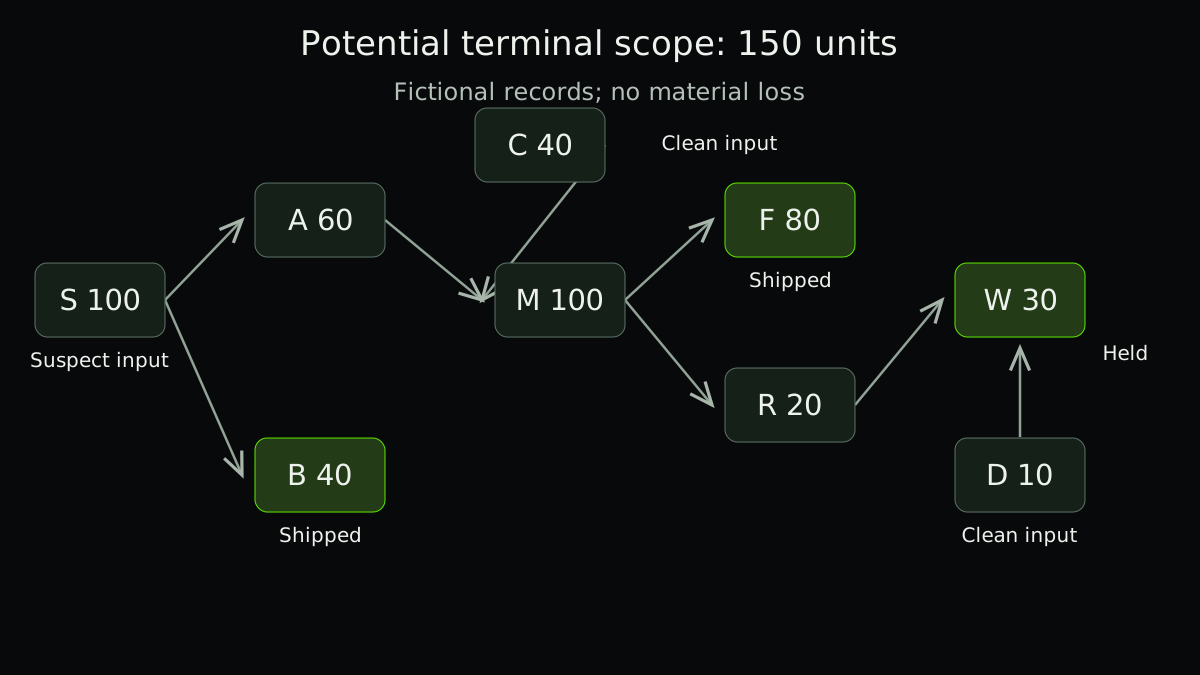
The fictional input S contains 100 units and splits into A60 and B40. A combines with 40 clean units C to make M100. M splits into F80 and R20. R is reworked together with ten clean units D to make W30. We assume no material loss and one consistent unit throughout.
B40 and F80 have shipped; W30 is held in stock. Rework receives a new lot ID while retaining its input R and the added material D. Replacing R with a fresh “good” label would erase the route the investigation needs.
| Event | Inputs, units | Outputs, units |
|---|---|---|
| E1: split | S100 | A60 + B40 |
| E2: mix | A60 + C40 | M100 |
| E3: split | M100 | F80 + R20 |
| E4: rework | R20 + D10 | W30 |
Count the terminal population, not every box in the history
Following S reaches A, B, M, F, R and W. At the chosen snapshot only B40, F80 and W30 are terminal outputs: 150 potentially affected units. A, M and R were consumed; adding them again would inflate the scope.
The 150 includes clean material mixed into downstream lots. Without retained piece identity or other justified exclusion evidence, the conservative population can be larger than the original 100 units. It is not 150 proven defects. Do not allocate exact suspect-piece counts using proportions alone.
Intermediate A, M and R are not added again. The scope includes commingled inputs; physical defects and actual shipment status require separate evidence.
A missing link is an open question
Remove E3 and the query cannot connect M to F and R. A program can still return a neat list, but the evidence is incomplete. It must not declare F or W safe just because they are unreachable in the damaged record. Reconcile production orders, consumption, rework and shipments before narrowing the hold.
Check quantities and units at every event. The example conserves units because it assumes no scrap or conversion. Real processes need explicit yield, scrap and unit conversions; a kilogram input is not directly comparable with a piece output. Retain the conversion used at the time, rather than recalculating old events from today’s master data.
Capture enough evidence to repeat the query
Record unique event and lot IDs, inputs and outputs, units, event time, recording time, location, disposition and the source system or document. Preserve corrections as revisions with a reason. A late-recorded event may change yesterday’s apparent genealogy; rerun the scope and notify the responsible team.
The downloadable JSON includes the original four events, the expected terminal set and blank capture fields. It has no real customer or shipment data. Use it to discuss a record format, not as an audited traceability system.
- Define the snapshot and seed
Name the suspect input, affected characteristic, time boundary and containment authority.
- Traverse the recorded links
Follow every split, mixture and rework output; deduplicate lot identities.
- Reconcile the result
Check completeness, material accounting and actual current stock or shipment records.
- Keep the disposition separate
Record hold, release or recall decisions under the applicable product and legal requirements.
Use genealogy to scope the investigation
After containment, use root cause analysis to test why the problem occurred. The supporting Five Whys lesson is about evidence for a causal chain, not lot genealogy. A shared input can suggest a question; it does not establish the cause.
Use manufacturing data analytics to check source quality and first-pass yield to keep rework visible. Vrolen is in private pilot. The practical connection is to preserve what the team knew when it chose an action, including any unresolved links.
A related example from Abolfazl
See why old event quantities must retain the conversion used at the time.
In English, on founder Abolfazl’s personal blog. This is related reading, not an independent technical source.
Practical checklist
- Define seed lot, question and snapshot.
- Keep unique lot and event IDs.
- Capture split, mixing and rework parents.
- Keep quantities and explicit units.
- Separate event time from recording time.
- Reconcile current stock, shipments, scrap and conversions.
- Mark missing links and corrections openly.
- Keep potential scope separate from defects and authorized disposition.
FAQ
FAQ
Sources and further reading
Authoritative references used to research and verify this guide.