
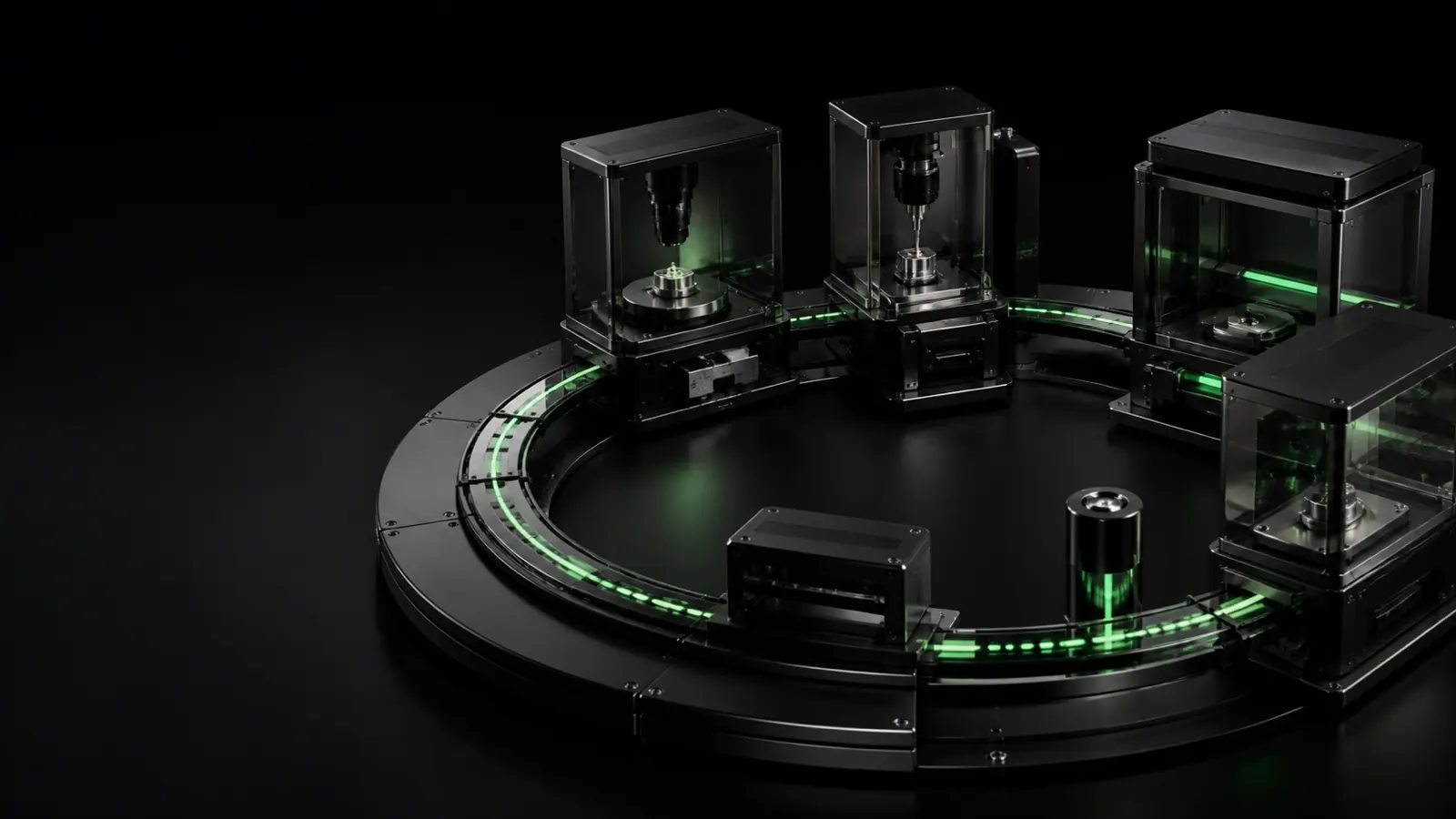
Continuous improvement in manufacturing is a managed, repeating system for making work safer, more capable, more reliable, and better able to deliver customer value. It connects a clear performance gap with direct observation, trustworthy data, causal learning, a controlled experiment, and follow-up that proves whether the gain held. It is broader than a suggestion program and more disciplined than a sequence of disconnected projects.
A repeatable path from operating signal to verified countermeasure
Daily learning connected to strategic manufacturing priorities
Improvements sustained through ownership, standards, and follow-up
Define continuous improvement as an operating system
NIST describes continuous improvement as an organizational mindset focused on ongoing effort, while Lean Enterprise Institute places PDCA and Kaizen at the center of scientific learning. In practice, the system needs explicit inputs, decisions, roles, and feedback, not just encouragement to submit ideas.
Separate three rhythms. Daily management exposes deviations from standard. Structured problem solving addresses recurring or consequential gaps. Portfolio review selects larger cross-functional or capital changes. Connecting the rhythms prevents small abnormalities from disappearing and prevents every problem from becoming a large project.
- Purpose and customer outcome
- Visible standard and target condition
- Safe route for surfacing abnormalities
- Evidence and experiment method
- Owner, review cadence, and escalation path
Start with a measurable gap at the gemba
Write the current condition and target in operational terms: product, process boundary, shift, time window, expected result, observed result, and impact. Visit the work with the people who run and support it. A dashboard can locate a pattern; it cannot show every workaround, queue rule, material condition, or control behavior.
Preserve the baseline before changing anything. Use counts, timestamps, process states, quality evidence, maintenance history, and direct observations. Label estimates and missing data. If the team cannot agree on what success means, it is too early to debate solutions.
Use the smallest experiment that can teach safely
Form a causal hypothesis and state the predicted result before the trial. Choose the smallest reversible change that can distinguish the hypothesis from alternatives. Keep safety, regulatory, quality, and customer controls outside the experiment unless a qualified owner approves a controlled change.
Compare like conditions and record what else changed. A useful test may be one shift, one product family, one machine mode, or a simulation when the live system cannot be interrupted. The result should show effect size, uncertainty, side effects, and the conditions under which the conclusion applies.
- Frame
Define the gap, customer consequence, boundary, and owner.
- Observe
Build a shared timeline from process evidence and direct work observation.
- Predict
State the mechanism, expected result, and evidence that would disprove it.
- Test
Run a bounded change or validated scenario with guardrails.
- Verify
Confirm the local mechanism and system outcome over time.
Connect daily improvement to priorities and capacity
Not every idea deserves immediate work. Rank opportunities by expected system impact, confidence in the evidence, effort, risk, strategic fit, and available people. Protect capacity for urgent containment, daily improvements, and a small number of deeper projects.
Make stopping rules explicit. Close work that lacks an owner, cannot obtain evidence, duplicates another effort, or no longer addresses the constraint. A healthy pipeline contains rejected and paused ideas as well as completed ones; otherwise prioritization is ceremonial.
Sustain the result without freezing the process
Update standard work, training, controls, maintenance tasks, data definitions, and response rules after the result is verified. Assign a process owner and define a review window long enough to include different products, shifts, and operating conditions.
Sustainment does not mean treating the new method as permanent. It means making the best known method visible, detecting drift, and reopening PDCA when the context changes. Compare actual benefit with the prediction so future prioritization becomes more accurate.
A related example from Abolfazl
Abolfazl reflects on keeping the result connected to the original improvement decision.
In English, on founder Abolfazl’s personal blog. This is related reading, not an independent technical source.
Practical checklist
- Define the customer or business outcome before the solution.
- Describe the current gap with boundary, time, product, and expected condition.
- Observe the real work with operators and support functions.
- Preserve baseline evidence and label uncertainty.
- State a causal hypothesis and predicted result before testing.
- Use safety, quality, and regulatory guardrails.
- Verify the system outcome and side effects over a representative window.
- Update standards, ownership, and monitoring after the gain is confirmed.
FAQ
FAQ
Sources and further reading
Authoritative references used to research and verify this guide.