
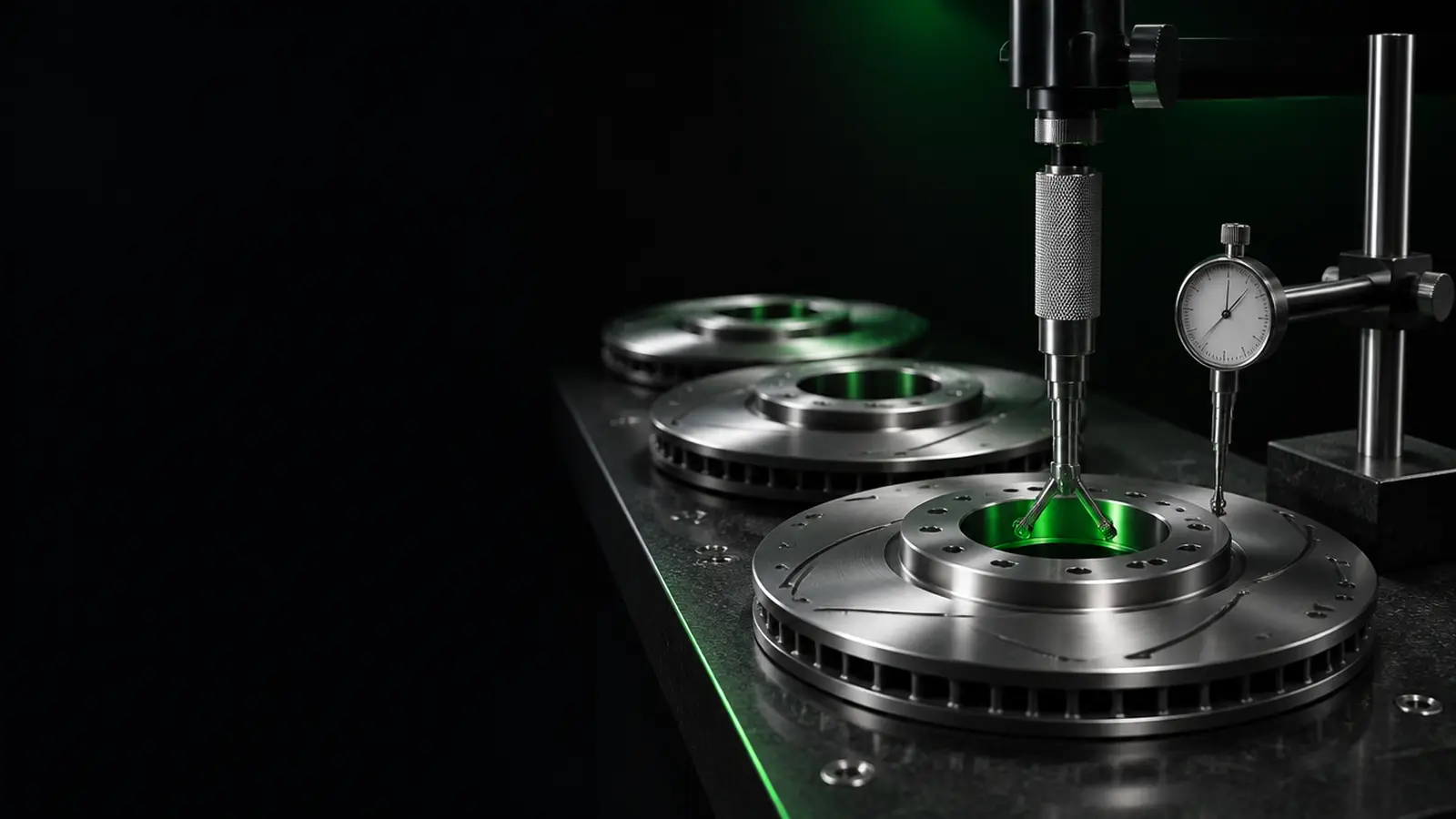
How the Gage R&R calculator works
Each line is one measurement. The calculator runs a two-way ANOVA with parts and operators as factors, keeps the interaction term and converts mean squares into variance components.
Repeatability is the variation when one operator measures the same part again. Reproducibility is the variation between operators, including the interaction. Their sum is the measurement system variation. The Gage R&R guide explains each step with a worked study.
ndc = floor(1.41 × σ(parts) / σ(R&R)). Percent contribution uses variances instead of standard deviations.
Collect the readings properly
Choose parts that cover the real production range, not ten nearly identical parts. Randomise the measuring order and hide earlier results from the operators. Use the same gauge, method and location you use in production.
- 10 parts, 3 operators and 2 or 3 trials is a common design.
- Record every reading, including ones that look wrong.
- Use the full resolution of the gauge.
How to read your result
Percent study variation compares measurement error with the variation in your sample. Percent of tolerance compares it with the specification. A study can look good against a wide sample and poor against a tight tolerance, so check both.
ndc tells you how many groups of parts the system can reliably tell apart. Five or more is a common minimum. For pass or fail inspections, use an attribute agreement analysis instead.