

Calculate energy per good unit by dividing energy consumed within a defined production boundary by accepted output from the same period and boundary. Keep electricity, other fuels, product mix and acceptance rules explicit. Report total energy and output beside the ratio. A lower utility total does not prove improved efficiency if accepted output falls faster. Compare like-for-like conditions or use a justified normalization model before attributing the change to an improvement.
Calculate a matched kWh-per-accepted-unit measure.
See why lower consumption can hide worse output quality.
Separate product-mix and idle-load effects from an efficiency claim.
Choose the energy and production boundary together
The U.S. Department of Energy defines an energy-intensity measure as energy divided by productive output, with matching scope and time. For a line-level electricity measure, use a meter serving that line and accepted output attributable to the same declared interval.
A whole-site meter may include compressed air, heating, offices and several lines. Dividing it by one line’s output can still be a declared site-allocation metric, but it is not directly measured line efficiency.
This guide uses electrical kWh per accepted unit. Fuel and steam need consistent units and an explicit allocation or conversion method before combining them. Keep site, line and process measurements distinguishable.
Make good output a deliberate denominator
Define an accepted unit: first-pass accepted, finally accepted after rework, or shipped product. Each answers a different question. For this example, it means final accepted units from a completed comparable production interval.
Rework energy stays in the numerator when it occurs inside the boundary. Count the recovered unit once in final accepted output. Also report first-pass yield so recovery does not conceal the extra work.
Energy consumption and final disposition can fall in different periods when WIP carries over. Reconcile opening and closing WIP or select an appropriate completed cohort and matching energy allocation; do not pretend a ratio of mismatched periods is precise.
Same process boundary and declared window. No accepted output means the ratio is undefined; report the energy and reason separately.
Less electricity, worse energy per good unit
Illustrative example: two comparable completed production runs each attempt 1,000 units of the same product within the same metered line boundary. The first uses 1,000 kWh and accepts 900 units. The second uses 950 kWh and accepts 800.
Total electricity falls 5%. However, intensity rises from 1,000 / 900 = 1.1111 to 950 / 800 = 1.1875 kWh per accepted unit. Relative to the first run, that is a 6.875% increase, rounded to 6.9%.
These are teaching numbers, not a typical industry benchmark. The difference suggests a quality and energy investigation; it does not by itself identify the cause.
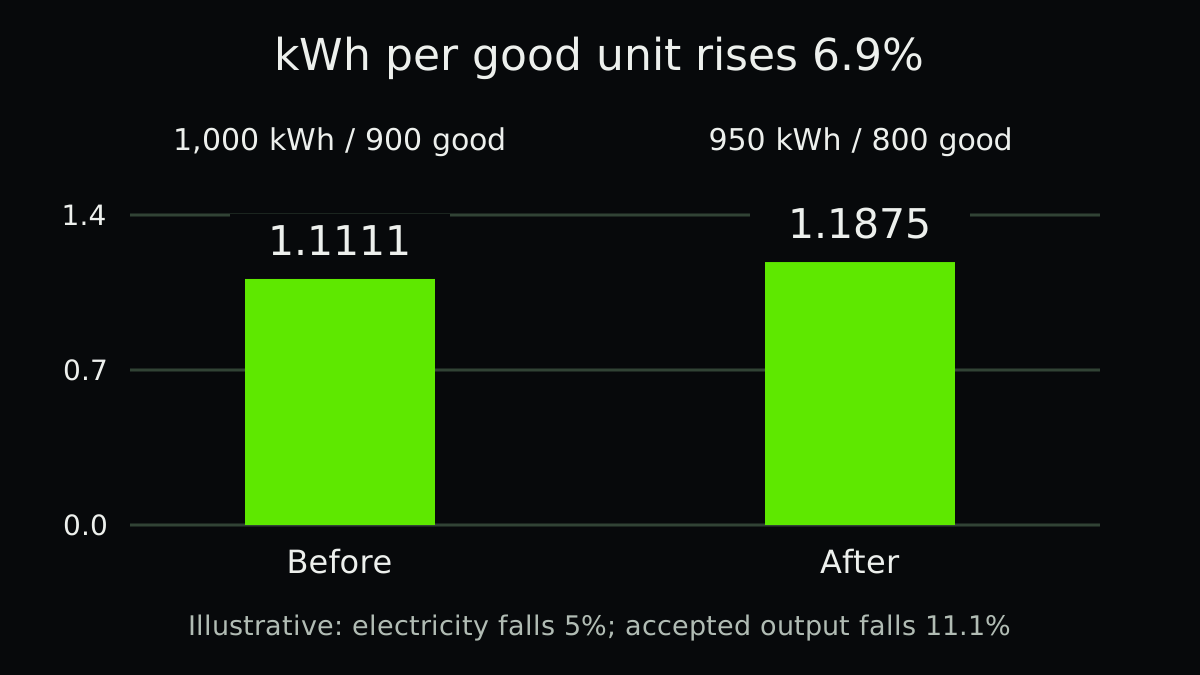
| Matched run | Electricity | Accepted output | kWh/good unit |
|---|---|---|---|
| Before | 1,000 kWh | 900 | 1.1111 |
| After | 950 kWh | 800 | 1.1875 |
| Change | −5.0% | −11.1% | +6.9% |
Separate product mix and base load
A plant making more of an energy-intensive product can show worse aggregate kWh per unit with no deterioration in either product’s process. DOE’s indicator guidance explicitly distinguishes such structural changes from underlying efficiency changes.
Compare within product families where units have comparable meaning. Report summed energy divided by summed accepted units for a valid aggregate, rather than averaging daily ratios without weighting. Tonnes, pieces and litres need a justified common output basis before combining.
Heating an oven or maintaining pressure can consume energy even with low production. Keep idle and warm-up load visible, then test whether a schedule or operating change reduces it without harming quality or safety.
- Audit the meter boundary
List included equipment, shared services, meter resolution and missing readings.
- Join matched production records
Retain product, time, attempted units, accepted units, rework and WIP treatment.
- Compare suitable periods
Match mix, operating time and relevant conditions, or document a validated normalization method.
- Verify a proposed change
Review total kWh, accepted output, quality and constraints together after the change.
Handle bad and missing data openly
A zero meter increment during a logging outage is missing energy, not free production. Counter resets, estimated utility reads and duplicate pulses also need explicit handling.
With zero good output, report consumed energy and the stopped or rejected-production context. An infinite or silently replaced zero ratio is a poor trend signal.
Use a manufacturing KPI tree to retain output, quality and energy together, and the OEE loss guide for operating losses. The measures share evidence but not identical denominators.
Keep energy and carbon claims separate
Converting electricity to emissions requires an appropriate, stated emissions factor and reporting method. A kWh-per-unit change cannot establish a carbon result without that additional evidence.
A defensible improvement claim names the period, boundary, product mix, intervention and remaining uncertainty. The operational metrics guide helps connect the measure to an accountable decision instead of another unexplained target.
Practical checklist
- Define equipment and energy sources inside the boundary.
- Use a matching production window.
- State first-pass or final accepted output.
- Reconcile rework and WIP timing.
- Keep total energy and good output beside the ratio.
- Compare product mix and base-load conditions.
- Flag missing readings, resets and zero-output periods.
- Verify quality and operational effects before claiming savings.
FAQ
FAQ
Sources and further reading
Authoritative references used to research and verify this guide.