
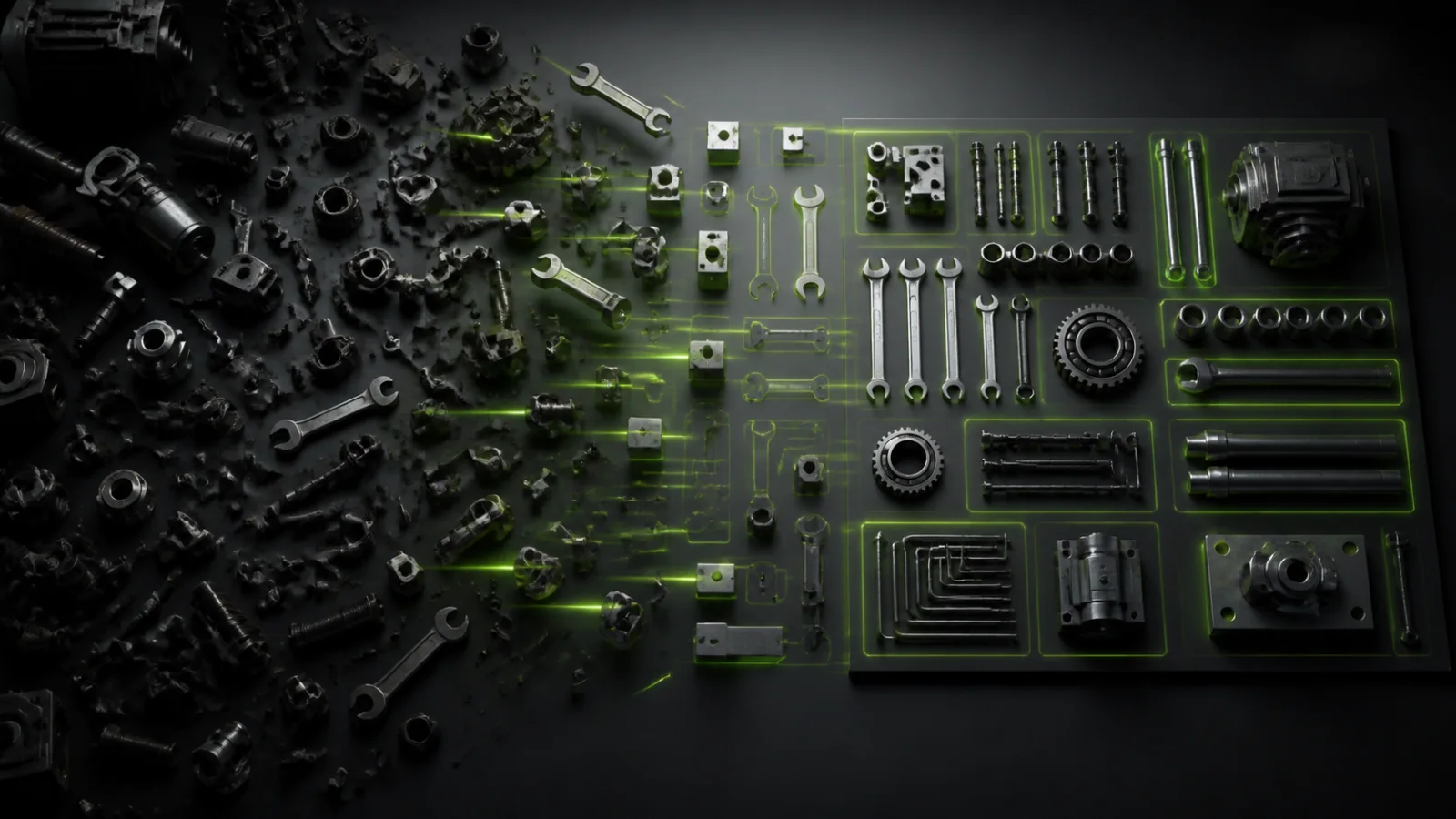
Use sort, set in order, shine, standardize, and sustain to expose abnormal conditions and protect flow. Begin with one bounded work area. Photograph the baseline, red-tag what is unnecessary, place frequently used items at the point of use, make cleaning an inspection, then define a visual standard and an audit owned by the team. Do not score appearance alone. A tidy area can still hide unsafe access, long travel, excess inventory, or an unstable replenishment rule. 5S methodology: AI and automation may accelerate analysis, but people remain responsible for safety, quality, interpretation, and approval.
Visible abnormal conditions
Lower motion and search loss
Stronger standard work
Choose a work outcome before sorting
Use sort, set in order, shine, standardize, and sustain to expose abnormal conditions and protect flow.
Do not score appearance alone. A tidy area can still hide unsafe access, long travel, excess inventory, or an unstable replenishment rule. 5S methodology: Use evidence from the real process and keep source, timestamp, unit, and uncertainty visible.
- search time
- walking and reaching
- missing or excess items
- safety and abnormal-condition observations
Measure motion, search, safety, and replenishment
5S methodology: Use evidence from the real process and keep source, timestamp, unit, and uncertainty visible. Focus on search time, walking and reaching, missing or excess items, safety and abnormal-condition observations.
Begin with one bounded work area. Photograph the baseline, red-tag what is unnecessary, place frequently used items at the point of use, make cleaning an inspection, then define a visual standard and an audit owned by the team. 5S methodology: Preserve a baseline and change one important assumption at a time so the team can explain the result.
- search time
- walking and reaching
- missing or excess items
- safety and abnormal-condition observations
Run the five steps as one operating cycle
Begin with one bounded work area. Photograph the baseline, red-tag what is unnecessary, place frequently used items at the point of use, make cleaning an inspection, then define a visual standard and an audit owned by the team.
Do not score appearance alone. A tidy area can still hide unsafe access, long travel, excess inventory, or an unstable replenishment rule. 5S methodology: Preserve a baseline and change one important assumption at a time so the team can explain the result.
Audit function, not cosmetic compliance
5S methodology: Use simulation or a controlled pilot when interactions, queues, failures, mix, or timing could move the effect elsewhere. Begin with one bounded work area. Photograph the baseline, red-tag what is unnecessary, place frequently used items at the point of use, make cleaning an inspection, then define a visual standard and an audit owned by the team.
Do not score appearance alone. A tidy area can still hide unsafe access, long travel, excess inventory, or an unstable replenishment rule.
- Choose a work outcome before sorting
Use sort, set in order, shine, standardize, and sustain to expose abnormal conditions and protect flow.
- Measure motion, search, safety, and replenishment
5S methodology: Use evidence from the real process and keep source, timestamp, unit, and uncertainty visible.
- Run the five steps as one operating cycle
Begin with one bounded work area. Photograph the baseline, red-tag what is unnecessary, place frequently used items at the point of use, make cleaning an inspection, then define a visual standard and an audit owned by the team.
- Audit function, not cosmetic compliance
5S methodology: Use simulation or a controlled pilot when interactions, queues, failures, mix, or timing could move the effect elsewhere.
- Make abnormalities easier to see every shift
5S methodology: Assign an owner, review date, response rule, and success measure. Compare the observed result with the prediction and update the standard.
Make abnormalities easier to see every shift
5S methodology: Assign an owner, review date, response rule, and success measure. Compare the observed result with the prediction and update the standard.
5S methodology: AI and automation may accelerate analysis, but people remain responsible for safety, quality, interpretation, and approval. Do not score appearance alone. A tidy area can still hide unsafe access, long travel, excess inventory, or an unstable replenishment rule.
A related example from Abolfazl
Use a packing bench to connect locations, replenishment and a usable shift check.
In English, on founder Abolfazl’s personal blog. This is related reading, not an independent technical source.
Practical checklist
- Use sort, set in order, shine, standardize, and sustain to expose abnormal conditions and protect flow.
- 5S methodology: Use evidence from the real process and keep source, timestamp, unit, and uncertainty visible.
- 5S methodology: Preserve a baseline and change one important assumption at a time so the team can explain the result.
- Begin with one bounded work area. Photograph the baseline, red-tag what is unnecessary, place frequently used items at the point of use, make cleaning an inspection, then define a visual standard and an audit owned by the team.
- 5S methodology: Use simulation or a controlled pilot when interactions, queues, failures, mix, or timing could move the effect elsewhere.
- 5S methodology: Assign an owner, review date, response rule, and success measure. Compare the observed result with the prediction and update the standard.
- 5S methodology: AI and automation may accelerate analysis, but people remain responsible for safety, quality, interpretation, and approval.
FAQ
FAQ
Sources and further reading
Authoritative references used to research and verify this guide.